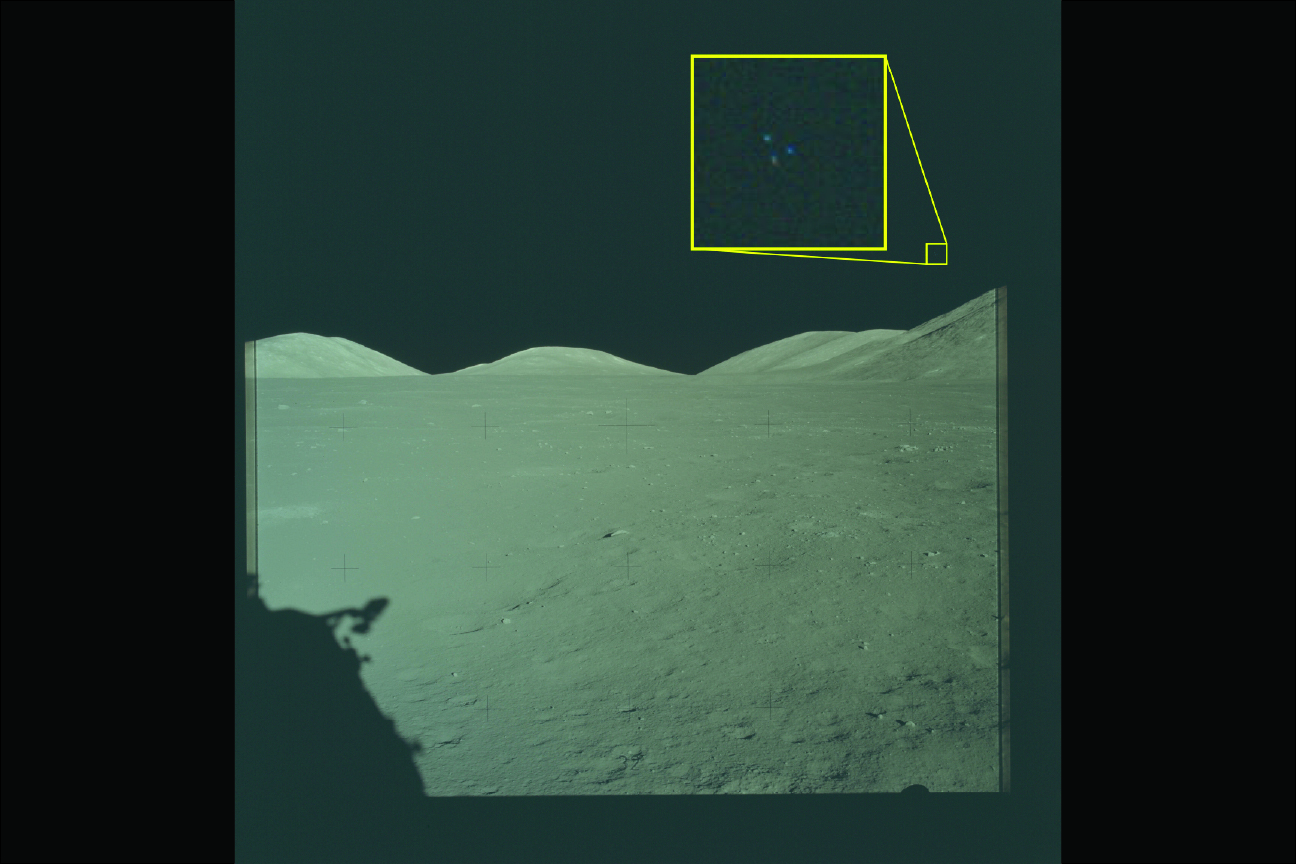
PURSUE lists NASA-UAP-D2 (Apollo 17 transcript, dated 1972), NASA-UAP-D5 (Apollo 17 Crew Debriefing for Science, 1973), NASA-UAP-D6 (Apollo 17 Technical Crew Debriefing, 1973), NASA-UAP-VM5 and NASA-UAP-VM6 (Apollo 17 surface images, 1972). All are surfaced together under the location tag "Moon" or as referenced 1972-1973.
Apollo 17 launched on December 7, 1972 and concluded the Apollo program with a December 19 splashdown. Eugene Cernan commanded; Ronald Evans piloted the command module; Harrison "Jack" Schmitt — the only trained scientist to walk on the lunar surface during Apollo — was lunar module pilot. The crew conducted three EVAs in the Taurus-Littrow valley.
Independent reporting on the PURSUE drop highlights one observation from the Apollo 17 record that the Department of War chose to surface: Schmitt's report, captured in the contemporaneous mission log, of "a flash on the lunar surface north of Grimaldi (crater)." The remark sits inside what's now part of the UAP archive. Whether the parameters of his observation match the meteoroid-impact-flash signature that later NASA Marshall instrument programs would catalogue, or whether they don't, is the kind of question the surrounding documents may help answer.
The two crew debriefings — one for Science, one Technical — sat in the broader Apollo archive for decades. Their migration into a UAP-specific collection is the bureaucratic act that makes them part of this story. Researchers walking the documents will work the same questions they have asked of the broader Apollo record: what did the crew see, how did the mission report it, and what does the surrounding evidence say about each event.
Case data (from war.gov/UFO)
- Mission: Apollo 17
- Crew: Eugene Cernan, Ronald Evans, Harrison "Jack" Schmitt
- Incident dates: 1972 (transcript and images), 1973 (debriefings)
- Location: Moon
- Files: NASA-UAP-D2, D5, D6 (PDFs); NASA-UAP-VM5, VM6 (images)
- Source agency: NASA
- PURSUE release: May 8, 2026